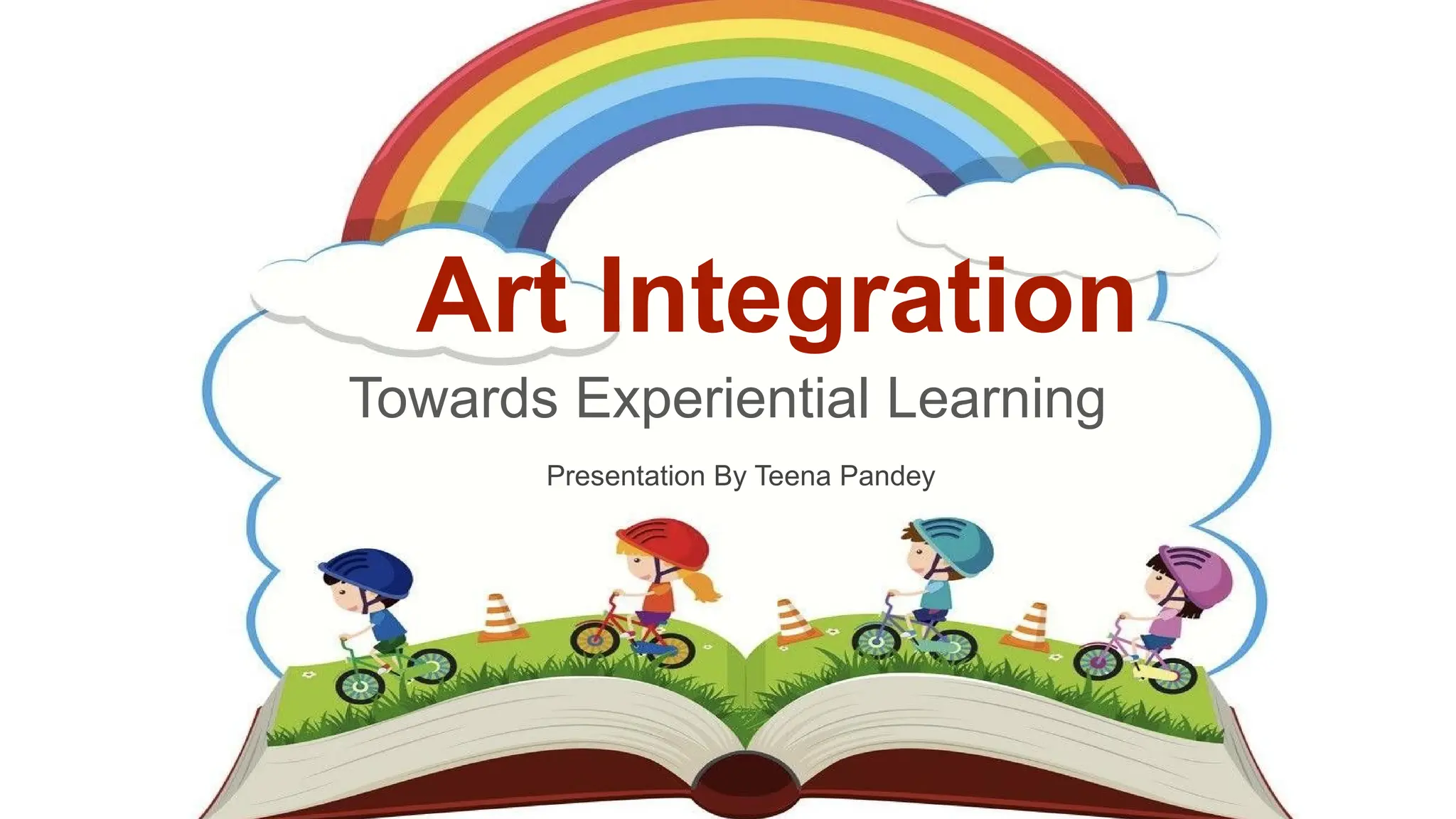
Creativity is no longer considered an optional enrichment in modern-day education: it has become one of the core learning skills. Indian schools are being motivated to make learning that integrates art central to the academic experience, both at the primary levels of education as well as in senior secondary education, with the introduction of NCF 2023 as part of NEP 2020.
When taught systematically and deliberately, art becomes so much more than a form of aesthetics. It enhances the acuity of observation, emotional intelligence, and critical thinking skills, which are the characteristics of future-ready learners.
The change in focus from activity-based to purpose-driven art education.
Conventionally, school art has mostly been confined to a series of isolated activities such as drawing, colouring, or craft work with little continuity between academic programmes. NCF 2023 is a challenge to this approach, which establishes art as a pedagogical tool, a tool that enriches insights across subjects, as opposed to on the fringes.
In the case of art-integrated learning, students can:
1. Visualise complex concepts.
2. Relate the abstract concepts to real life.
3. Learn to find solutions and analyse.
4. Develop self-confidence by developing creativity.
But proper implementation needs well-thought-out resources rather than activities that are made up of ad hoc activities.
An Art and Activity Framework of Kirti Publications.
The Art and Activity Series of Kirti Publications will be designed to offer a complete, grade-based creative learning model in accordance with the NCF 2023 and CBSE-orientated curriculum. The series goes beyond the field of free-form art, taking the students through a significant creativity process.
Pedagogical Design Step by Step.
Every activity is planned properly with specific goals and stages. This approach ensures that:
- All children, with or without artistic talent, are involved with confidence.
- Educators are able to provide instruction in a clear and consistent way.
- Outcomes of learning are also quantifiable and consistent with curriculum objectives.
- This process makes art a confidence-building scholastic process.
Cross-Curricular Integration Thematic
Projects are associated with the main academic fields that include:
1. Green research and environmental sustainability.
2. Science concepts and skills in observation.
3. History and culture, social values.
This interdisciplinary practice strengthens classroom instruction and promotes the ability of the students to think holistically.
Online support via the use of YouTube learning modules.
Chapter-wise support in the form of YouTube lessons can offer expert demonstrations and guided learning to allow learning outside the classroom. This ensures:
Developing EI and Cognitive Strengths.
Learning, which is art integrated, develops patience, resilience and emotional awareness qualities, which are now being acknowledged to be key to long-term success. Through organised creative activities, students get to learn how to express themselves, take criticism, and meet challenges with resilience.
Equipping the Learners for a Changing World.
Creativity is one of the most important human advantages in an age characterised by a swift technological and social transformation. Kirti Publications helps schools create balanced, assured and future-competent learners through carefully crafted books on art and activities and in accordance with national education reform and international learning standards.


